Showing posts sorted by relevance for query recycling. Sort by date Show all posts

Tuesday, 5 June 2007

Chullora: Recycling industry


Today is World Environment Day.

Chullora (an Aboriginal word meaning 'flour', apparently) is a mostly industrial suburb.
Just off Rookwood Rd, in Muir Rd, is the Chullora Waste and Recycling Centre. You can't miss the entrance, with this huge bicycle sculpture, presumably made of waste materials.

The suburb of Chullora was originally part of the area known as Liberty Plains, which was land given to the first free settlers who arrived in Sydney Cove on the 6th January 1793. Chullora was the name used for one of the estates in this area. It used to house large railway workshops.
Whilst still industrial, it is home to a host of new factories and warehouses, including brand new Tip Top bakery, and the printing works of the two major Sydney newspaper groups, Fairfax (publisher of the Sydney Morning Herald and Sun-Herald) and Rupert Murdoch's News Limited (publishers of the Daily and Sunday Telegraphs and The Australian)


Saturday, 19 April 2008

Sydney DP's 2nd birthday


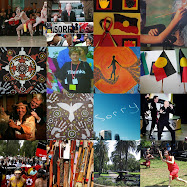
In the past year I learned how to use Picasa to make a collage.
When deciding how to illustrate a 2nd birthday I looked back at the photos I have posted in the past year, looking for my favourites - not necessarily the BEST, but my personal favourites.

In doing so I realised that my favourite photos are those which speak something of who we Sydney-siders (and in a couple of instances non-Sydney-siders) ARE. What do we do? How do we live? What do our faces and actions tell us? So, I give you 16 photos of people doing things, that somehow seem characteristic of US in all our diversity.

Thankyou to EVERYONE who has spent their time coming and looking at my snaps, reading my rants and leaving comments and generally engaging in this wonderful global community made possible through technology. I hope to be still going strong same time next year.

From top left to bottom right (click on each title below to see the original post):

Bronzed Aussie - 2 May 2007. Surveying the surf at Cronulla
Trusting Cyclist - 27 May 2007 - cyclist on way to work, Surry Hills
BYO Nargile - 16 July 2007 - family picnic at Garrison Point
Carp catching at Birrong - 28 June 2007 - clearing waterways of pest fish
On yer bike, Glebe - 16 Aug 2007 - youthful exuberance
Belly dancer - 27 Aug 2007 - Surry Hills
Recycling audit - 20 Sep 2007 - becoming more educated about recycling
Guest Workers in Australia - 28 Sep 2007 - protest about unfairness
Community Shed, Deloraine - 6 Nov 2007 - meeting Brian
Wading through cement - 28 Nov 2007 - remaking the footpath
Amy and Christina get ready for Christmas - 7 Dec 2007
Reading in the bookshop - 28 Dec 2007 - an activity close to my heart!
Washing the catch, Mossy Point - 10 Jan 2008 - SDP on holiday on the south coast
Straya Day, Carss Park - 26 Jan 2008 - youthful new Australian citizens, and Aboriginal dancers representing ancient culture
Lots of fun - 29 Jan 2008 - what would my collage be without some swimming!

Please indulge me - I am going to have a 2 day birthday party, and do another collage tomorrow. Please do return if you have time.

Thursday, 20 September 2007

Recycling audit


These two women came along our street the other morning. They were conducting an audit of the contents of recycling bins for the council, and leaving educative brochures. They were really friendly and ready to have a chat and help answer questions.

I learned that the polystyrene containers we had been putting in, shouldn't be. This is despite the manufacturers including the little symbol indicating they can be recycled. Apparently they break up all over the place and contaminate the rest of the contents and are too difficult to sift out at the plant. Apart from that, we got a tick of approval!

Tuesday, 24 October 2006

Series: Local Domestic Architecture Part 3: Federation

My 300th post today!


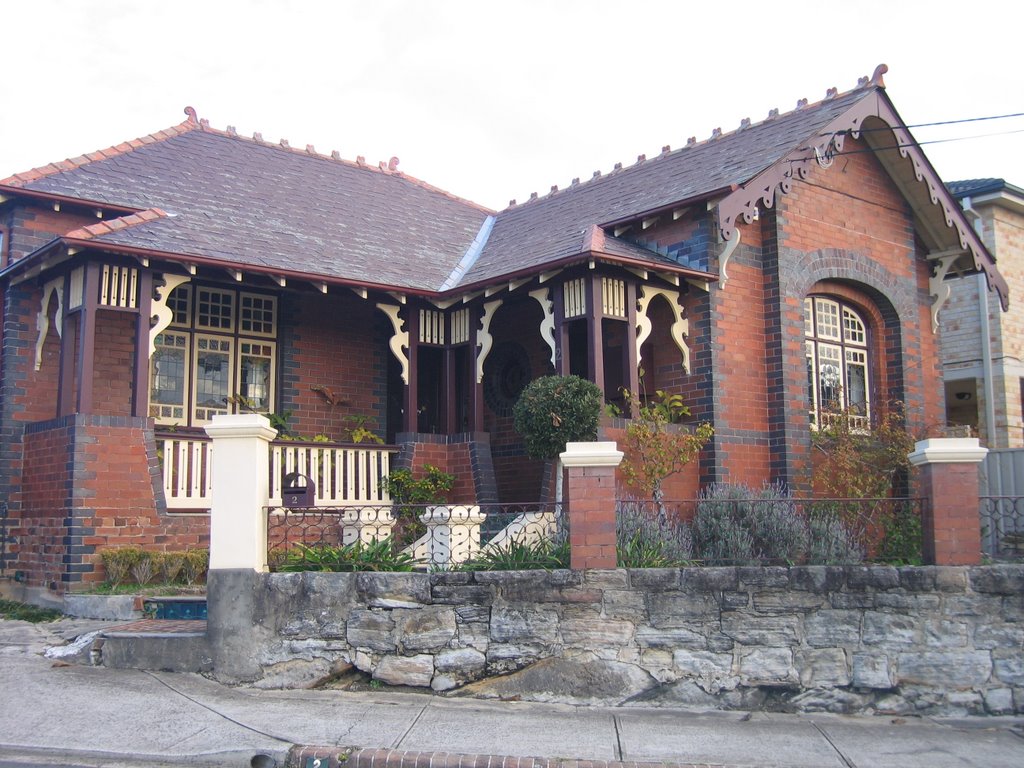
"Federation" style is the name given to what is known elsewhere as 'Edwardian', or 'Queen Anne' or 'Arts and Crafts' style. It derives its name from the fact that it was popular at the time the separate colonies were federating to form one nation, Australia (1901).

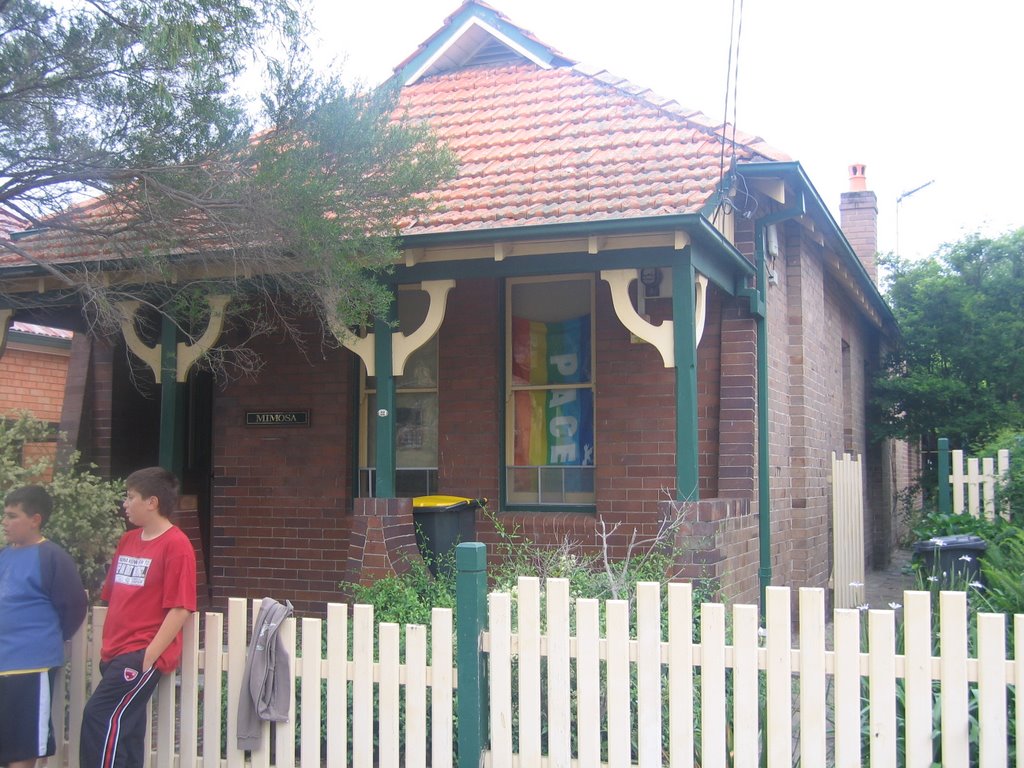
Evident in Federation is quite a lot of decorative work - wood, replacing cast iron, and roof features and small gables, as well as tuck-pointed brick work and leadlight and stained or coloured glass windows. The example above has a slate roof, but red Marseilles-style terracotta tiles became predominant in this era, shown in the picture of my house, below:

My house, some local kids, and our Italian 'Pace' (peace) flag. Oh, and the recycling bin on the verandah cos I was throwing out some papers. The mandarin tree you can see down the back is about 100 years old and still produces great fruit.

Thursday, 1 February 2007

What annoys me most in my city

Bad, low-quality development that is designed to make a fast buck for the developers, and does nothing to enhance the quality of life of the residents. And the councils and governments that allow it to take place.
At the bottom of this entry is a pic I have published before (on October 15th 2006), which typifies this. Sometimes it is called the "meritonisation" of Sydney, after the chief culprit, a company called Meriton. Link.

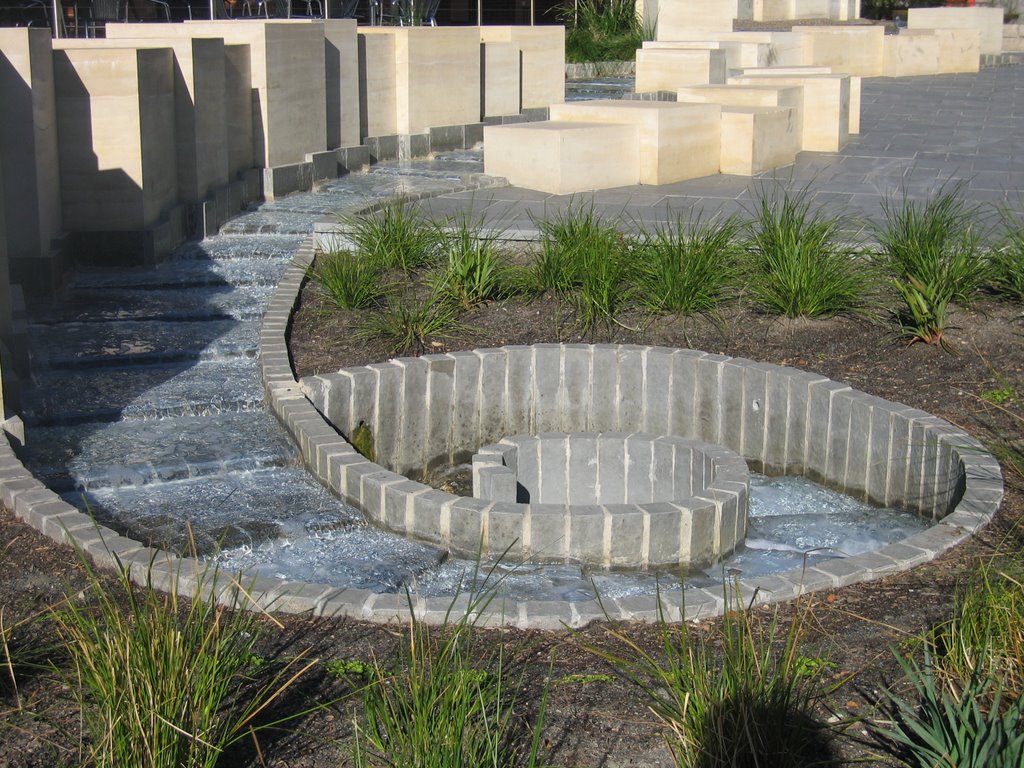
But I am not opposed to change and development, and acknowledge it is necessary to build high rise in places where once there were single family houses. This development, in the suburb of Kogarah, is an example of an attempt to do the right thing - and to enhance ecological sustainability.

Kogarah is a southern Sydney suburb dominated by a few large organisations - a large public and private hospital, the corporate headquarters of the St George Bank and a large technical college. This area was recently re-developed using passive design principles to maximise the use of natural flows of light, energy and heat.

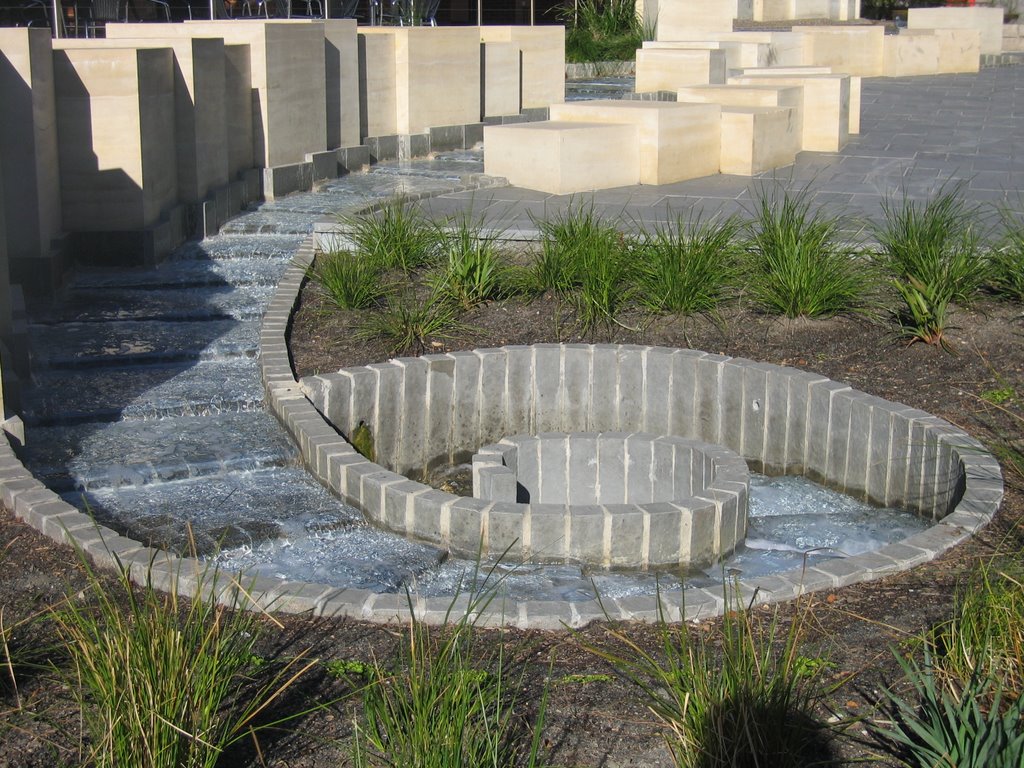
85% of rain and storm water is collected and re-used on site, including in town house gardens, toilet flushing, car washing and the water feature seen below.

Most of the living spaces are north-facing (the ideal in the southern hemisphere) , and most of the apartments are cross-ventilated, eliminating the need for air conditioning. As well, solar cells are built into the fabric of the building. Apartments include screened clothes drying balconies and areas, aimed at reucing the use of clothes dryers by apartment dwellers.

In this dry country, in the grip of the effects of El Nino, in a city running out of water, where global warming means energy use is going to have to be cut, but where huge downpours of rainwater run straight into the oceans, and airconditioning is fast becoming a "fact of life", this kind of development is going to have to become more prevalent.


A reminder of a meriton travesty: ugly buildings built without adequate infrastructure (like narrow, already traffic clogged-roads, lack of electrical capacity, no recycling or water saving measures...)
There's lots of stuff to love about Sydney, and there's other things that annoy me: like police sniffer dogs, racism, dodgy public transport, people who chuck rubbish around, sewerage being pumped into our beautiful ocean...but development without aesthetic quality or environmental concern tops my list!

Have a look at what other Daily Photo Bloggers around the world say annoys them in their cities. Due to world time differences, the theme photo may not be displayed until later in the day:
1 (Porto (Portugal) ) -2 (Stayton, OR (USA) ) -3 (Albuquerque, NM (USA) ) -4 (Tenerife (Spain) ) -5 (Greenville, SC (USA) ) -6 (Dubai (U.A.E.) ) -7 (Evry (France) ) -8 (Jakarta (Indonesia) ) -9 (London (UK) ) -10 (Sequim, WA (USA) ) -11 (Buenos Aires, (Argentina) ) -12 (Seattle, WA (USA) ) -13 (Minneapolis, MN (USA) ) -14 (Stavanger (Norway) ) -15 (Joplin , MO (USA) ) -16 (Nelson, New Zealand ) -17 (Milano, Italy ) -18 (Singapore (KeropokMan) ) -19 (La Antigua Guatemala (Guatemala) ) -20 (Nottingham UK ) -21 (Singapore by Zannnie (Singapore) ) -22 (Budapest (Hungary) ) -23 (Not Strictly Seattle, ) -24 (Bandung (Indonesia) ) -25 (Vantaa (Finland) ) -26 (Hyde (UK) ) -27 (Madrid by Dsole (Spain) ) -28 (Oulu (Finland) ) -29 (Saarbr?cken (Germany) ) -30 (St. Paul [Carol] ) -31 (Sydney (Australia) ) -32 (Tokyo (Japan) ) -33 (Kyoto (Japan) ) -34 (Trujillo (Peru) ) -35 (Shanghai (China) ) -36 (Rotterdam (NL) ) -37 (Chicago, IL (USA) ) -38 (Nice, (France) ) -39 (Naples, Florida (USA) ) -40 (Hong Kong ) -41 (Santa Clara, CA (USA) ) -42 (Quito, Ecuador (South America) ) -43 (Cottage Grove, MN (USA) ) -44 (Paris, (France) ) -45 (Manila (Philippines) ) -46 (Brussels (Belgium) ) -47 (Auckland (New Zealand) ) -48 (Newcastle upon Tyne(England) ) -

Tuesday, 19 September 2006

Remembrance of things past


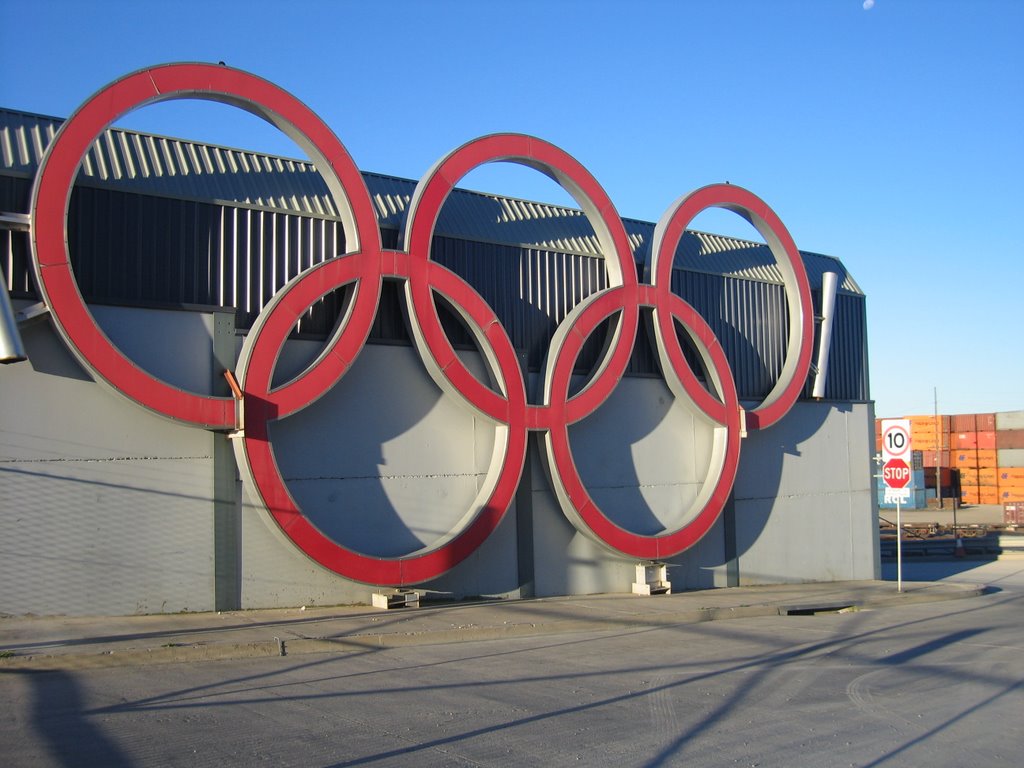
This is a metropolitan waste and recycling centre in Sydney. They are re-living the Olympic spirit from September - October 2000. Much of the Olympic accoutrements ended up as scrap. It's kind of nice they decided to keep these rings rather than stick 'em in the muncher-scruncher.

Sunday, 23 April 2006

Graffiti and Pollution Rant


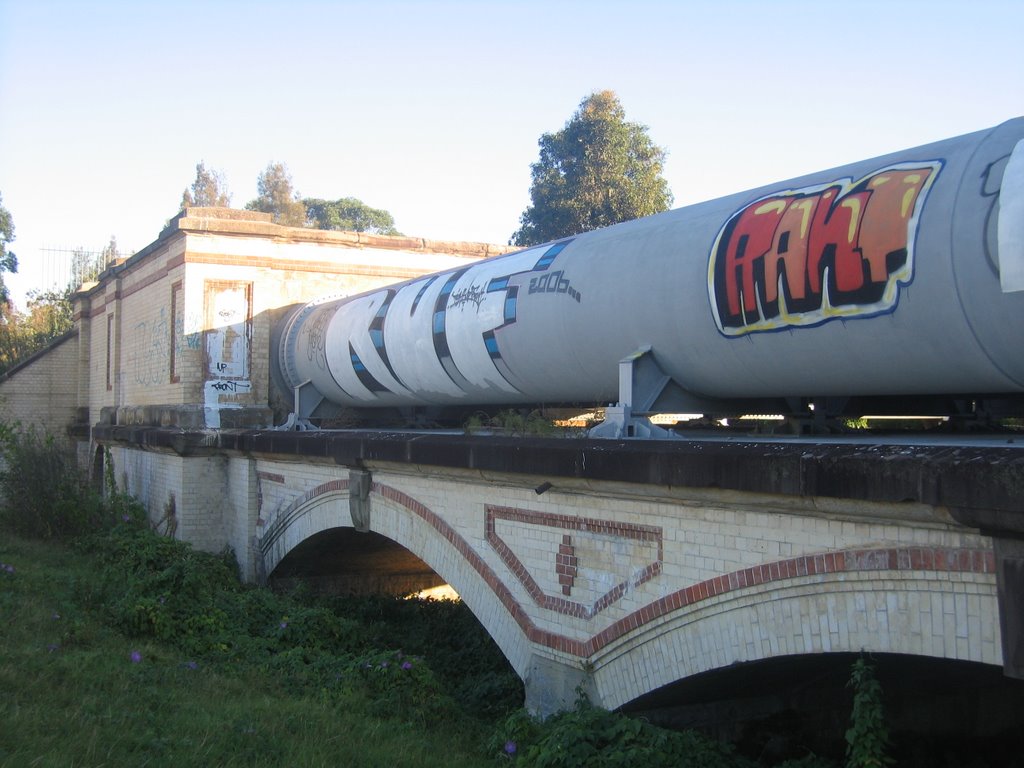
Graffiti art adorning the South Western Sydney Ocean Outfall Sewer aqueduct.

Yes, Sydney still pumps its sewerage into the ocean at various points. This lot, the effluent of 1.69 million people, goes to the treatment centre at Malabar before being discharged via the deep ocean outfall, 3.6 kilometres offshore. Out of sight, out of mind.

It is treated to a certain extent - called "high rate primary". Sydney Water tells us that primary treatment takes out solid matter such as paper, cotton tips and plastic. Heavy particles like sand sink to the bottom and are removed. The sewage then flows into the primary sedimentation tanks. Here human waste, called sludge, settles to the bottom and oils and grease float to the top where they are collected.

High-rate primary treatment occurs at high flow rates and removes fewer solids.

Sydney and NSW politicians have shown a distinct reluctance to consider proper recycling of effluent. The previous Minister responsible for water, Frank Sartor inflamed matters by saying that Sydneysiders were not prepared to drink recycled sewage, even if it was treated to drinking water standard and safe. You can read more of his wisdom here. Plenty of Sydney-siders reckon otherwise.

This despite the fact that Sydney is in the grip of drought.

So, which is the greater crime - some graffiti tags and a couple of abandoned spray cans, or the continued use of the Pacific Ocean as a sewer? You decide.